
Avant de parler plans, chaux ou isolation, il y a une conviction qui guide notre projet depuis le début : ces vieilles pierres ont traversé plusieurs siècles, elles méritent que l’on prenne le temps de les comprendre avant de les transformer.
C’est dans cet état d’esprit que j’ai participé à la deuxième partie de la formation organisée avec l’association Tiez Breiz. Après un premier module consacré à la lecture du bâti ancien, cette nouvelle session était dédiée à un sujet qui me passionne autant qu’il me questionne : comment isoler une maison ancienne sans la dénaturer ?
Une formation Tiez Breiz pour comprendre l’isolation du bâti ancien
Pendant deux jours, à la Maison du Canal, nous étions huit stagiaires réunis autour de Julien Anjevin, maçon et formateur Tiez Breiz. L’objectif n’était pas de trouver une recette miracle, mais de comprendre comment fonctionne réellement une maison ancienne.
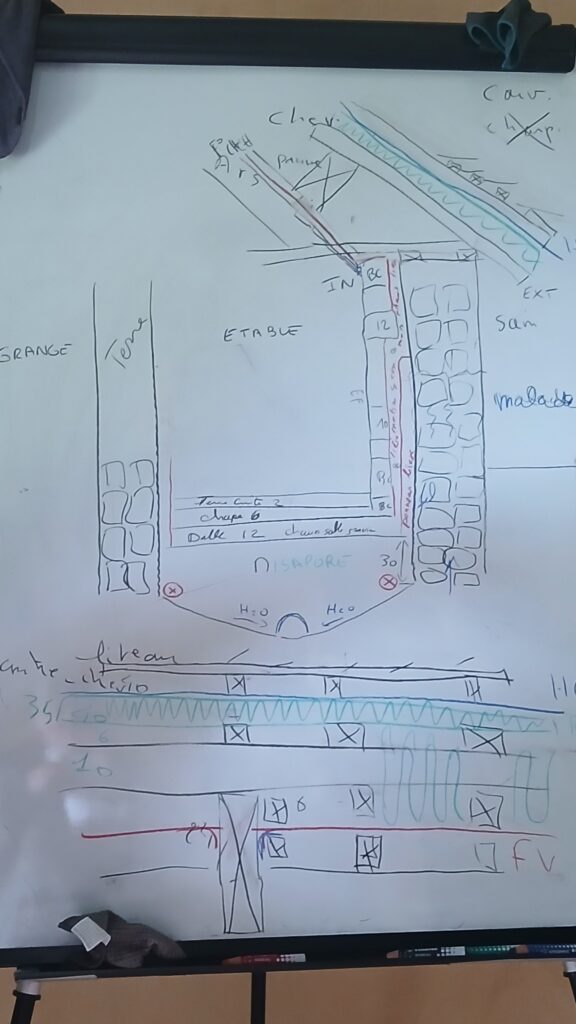
Car dans le bâti ancien, rien ne peut être considéré séparément. Le sol, les murs, la toiture, la charpente, la circulation de l’air et de l’humidité… tout est lié.
Une isolation performante ne consiste donc pas simplement à choisir « le meilleur isolant ». Au contraire, il faut réfléchir à l’ensemble du bâtiment et aux interactions entre tous ses éléments.
C’est probablement ce qui m’a le plus marquée pendant ces deux jours : comprendre qu’une maison ancienne est un système vivant et que chaque choix peut avoir des conséquences plusieurs années plus tard.
Rénover une maison ancienne : il n’existe pas de solution universelle
Cette formation a également fait écho à certaines interrogations concernant notre maison personnelle.
Comme beaucoup de propriétaires de maisons anciennes, nous avons hérité de travaux réalisés avant notre arrivée. Dix ans plus tard, certains désordres apparaissent et soulèvent de nombreuses questions.
Faut-il tout reprendre ?
Peut-on corriger certains défauts sans tout casser ?
Existe-t-il une solution idéale ?
La réalité est plus nuancée. Parfois, les réponses sont complexes et il faut accepter qu’il n’existe pas toujours de solution parfaite.
Ces réflexions m’ont confortée dans une idée : mieux vaut prendre son temps et comprendre un bâtiment avant d’intervenir, plutôt que de vouloir aller vite et risquer de créer des problèmes qui n’apparaîtront que plusieurs années plus tard.
Notre projet de gîtes en Bretagne : respecter le bâti ancien
Si je me suis inscrite à cette formation, c’est surtout pour notre futur projet de gîtes au Manoir de Kerozet.
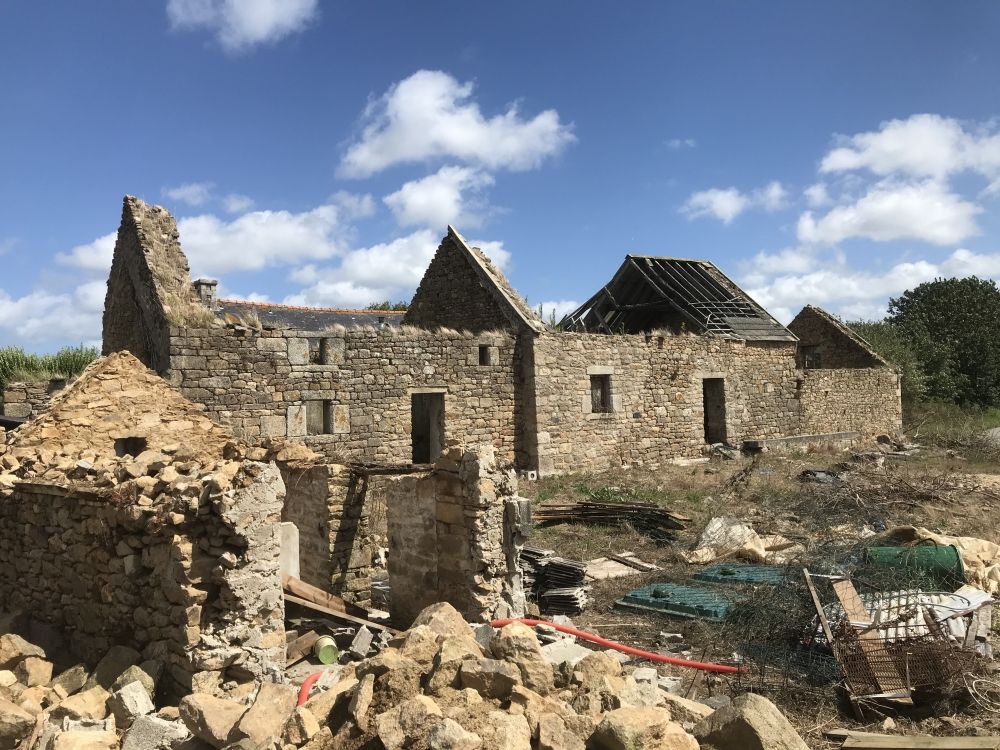
Si vous êtes déjà venus nous rendre visite, vous connaissez certainement les ruines présentes dans le jardin. Elles font partie intégrante du paysage et sont souvent au cœur des discussions avec nos voyageurs.
Derrière ces murs se cache un projet qui nous accompagne depuis plusieurs années : leur offrir une nouvelle vie tout en respectant leur histoire.
L’objectif n’est pas de transformer ces bâtiments anciens en constructions modernes, mais de trouver un équilibre entre :
- la préservation du patrimoine ;
- le confort des futurs voyageurs ;
- les contraintes techniques ;
- les exigences du diagnostic de performance énergétique (DPE) ;
- et la durabilité des travaux réalisés.
Un vrai casse-tête… mais aussi une aventure passionnante.
Isolation d’une maison en pierre : la difficulté du DPE
L’un des défis que nous rencontrons concerne les performances énergétiques.
Certaines solutions très intéressantes pour le bâti ancien ne sont pas toujours reconnues de manière optimale dans les calculs du DPE. Or, dans le cadre d’une location touristique, il est indispensable d’atteindre un niveau de performance compatible avec la réglementation actuelle.
Nous devons donc trouver des solutions qui soient à la fois :
- respectueuses des vieux murs ;
- durables ;
- adaptées au bâti ancien ;
- compatibles avec les exigences énergétiques actuelles.
Et tout cela sans chercher à tout prix les aides financières, puisque nous réalisons une grande partie du chantier nous-mêmes.
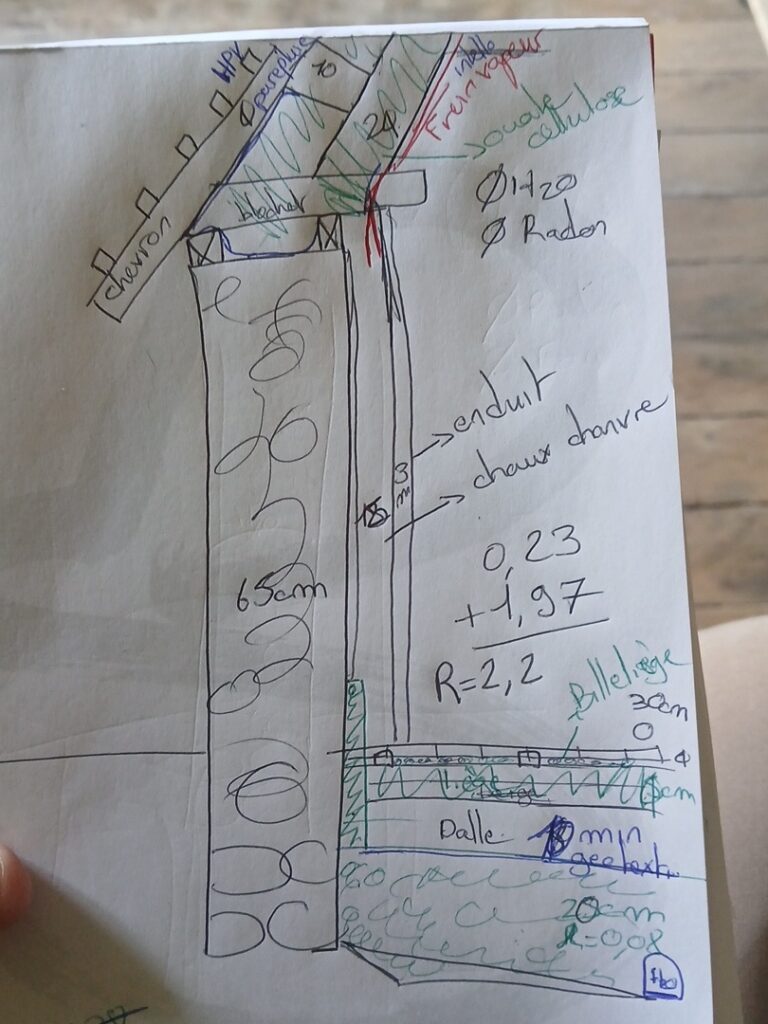
Penser dès aujourd’hui au confort d’été
Pendant longtemps, en Bretagne, on parlait surtout du confort en hiver.
Aujourd’hui, le confort d’été devient tout aussi important.
Ces dernières années, nous avons connu des épisodes de fortes chaleurs de plus en plus fréquents. Les 35 °C ne sont plus exceptionnels, et certaines années, les températures ont même approché les 40 °C.
Or, une toiture en ardoise peut facilement atteindre 70 °C en plein soleil.
Avec l’ajout de fenêtres de toit pour apporter de la lumière dans les futurs gîtes, le choix des matériaux devient essentiel.
Le déphasage thermique, c’est-à-dire la capacité d’un matériau à ralentir la pénétration de la chaleur, est désormais un critère majeur dans nos réflexions.
L’idée est simple : offrir à nos futurs voyageurs une maison agréable à vivre aussi bien pendant une tempête bretonne en février que lors d’une canicule au mois d’août.
Une formation qui m’a surtout apporté une méthode
Je ne suis pas revenue avec une réponse toute faite.
Je suis revenue avec quelque chose de beaucoup plus précieux : une méthode de réflexion.
Cette formation m’a permis de mieux comprendre les différents systèmes constructifs, de préciser certaines orientations et surtout de pouvoir expliquer plus clairement mes choix à Henri.
À la maison, c’est souvent moi qui imagine les plans et qui réfléchis à la conception générale. Henri, lui, apporte son regard plus technique, et valide ma vision selon les contraintes pratiques du chantier.
Nous ne sommes ni architectes ni artisans.
Nous apprenons, nous nous formons, nous échangeons avec des professionnels et nous avançons pas à pas.
Parce qu’au fond, notre ambition n’est pas simplement de construire de futurs gîtes en Bretagne.
Notre ambition est de transmettre un patrimoine vivant, de préserver l’âme de ces vieilles pierres et de leur permettre de continuer à traverser les siècles.
Et finalement, restaurer le bâti ancien, c’est peut-être cela : accepter qu’il n’existe pas toujours de réponse parfaite, mais chercher avec humilité la solution la plus juste.
Plus d’informations sur la formation : ICI